Moving Down Market
Gaining Market Share in a Fragmented Segment
Building a Product for SMB in a Company Used to Building Enterprise Grade Products.
When hired at EasyPost in 2023, the company had recently finished an acquisition spree creating a portfolio of over 10 products. Each product had its unique angle in market and focused on serving different customer segments. EasyPost had, up to that point, built success off of catering to large enterprise customers. They focused on customizable tooling and integration services.
Two of the acquisitions however, focused on SMB merchants. The products were designed for merchants with no developer resources or training. They were also designed for strained resources, and limited logistics industry knowledge.
Working with the Product Directors we developed a strategy on how to consolidate the offerings from the user perspective and how to enter the SMB market.
Heuristic Evaluations
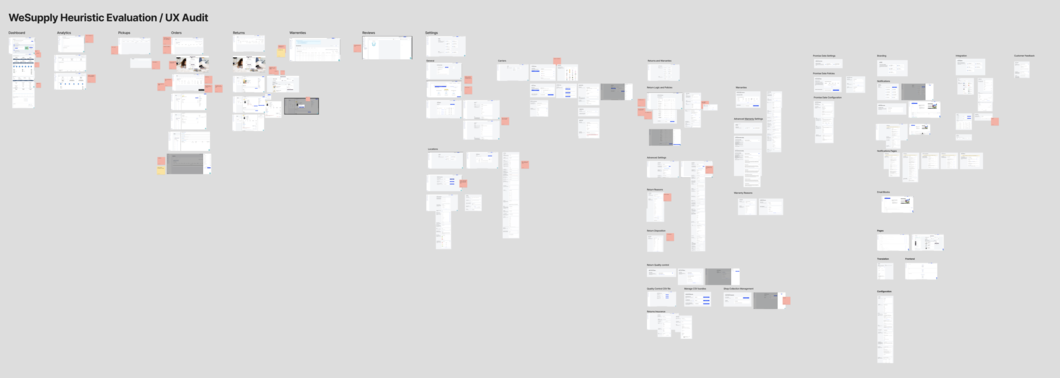
We started internally with auditing the products we had acquired to understand the existing functionality, customer base and current experiences.

WeSupply was one of the largest acquired products. It has a large customer base with notable brands like Wine Enthusiast and London Drug. Their claim to fame is their self serve Shopify store integration with a focus on returns management and tracking updates.

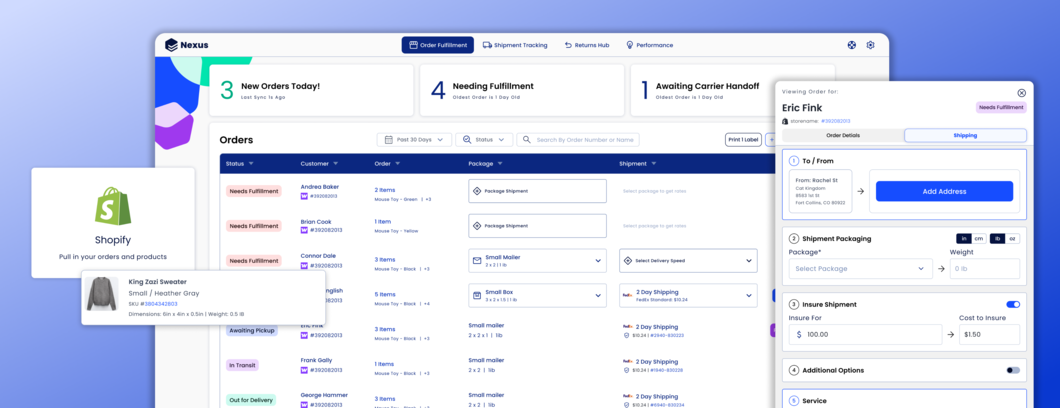
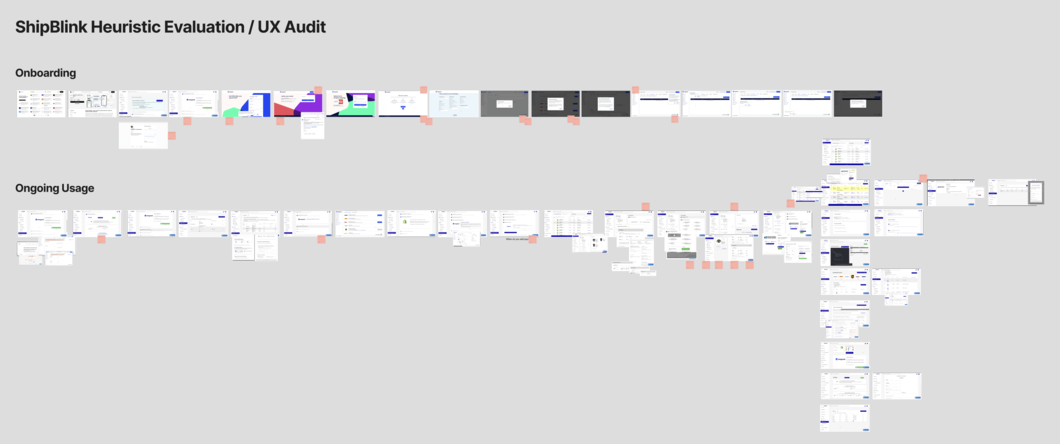
ShipBlink is one of the smaller acquisitions, it focuses on small startup companies and side hustles. The product is focused on a Shopify integration install and simple UI to handle incoming orders.
Feature Matrix
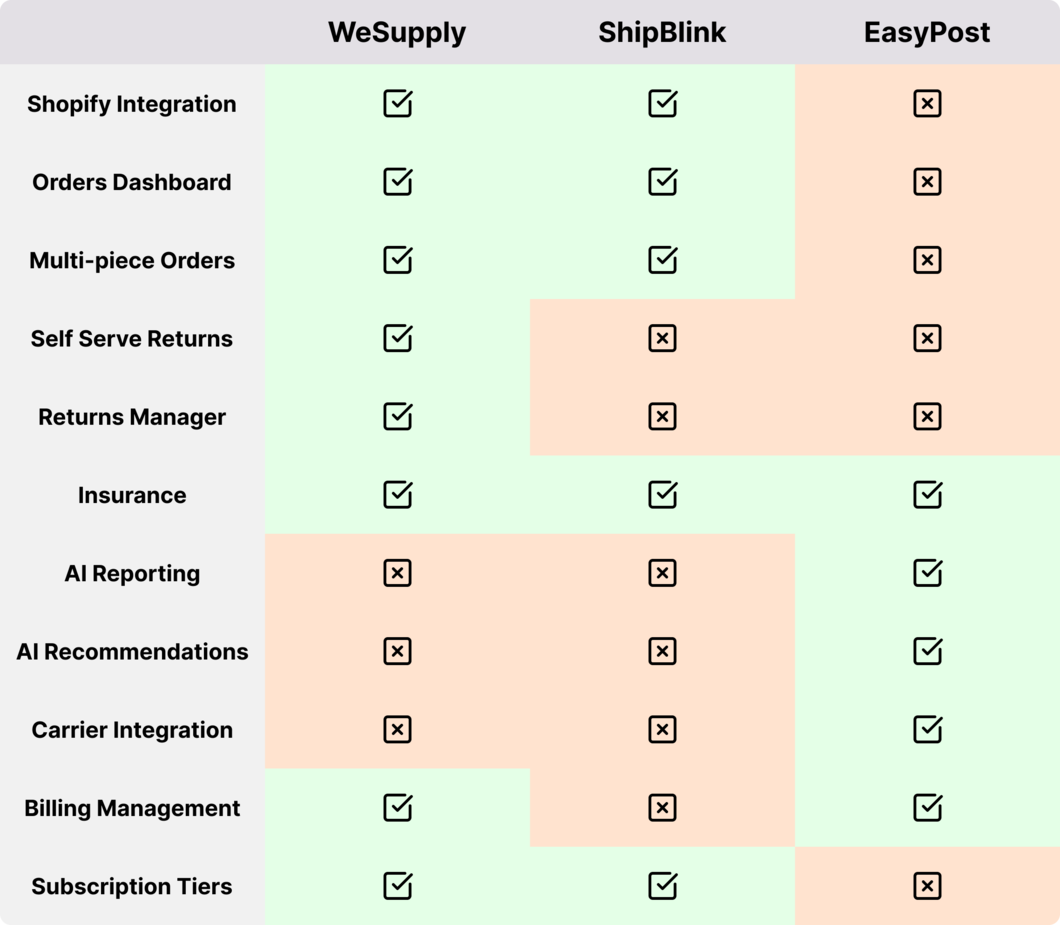
We matrixed the functionality differences between WeSupply, ShipBlink and EasyPost. WeSupply was decided to be the new foundation for EasyPost's SMB product offering, but it needed some of the more simple UI interactions from ShipBlink and some usability improvements.
Product Proposal and the Approval to Create the Nexus Product
Taking the Best of Each Product and Improving the Experience
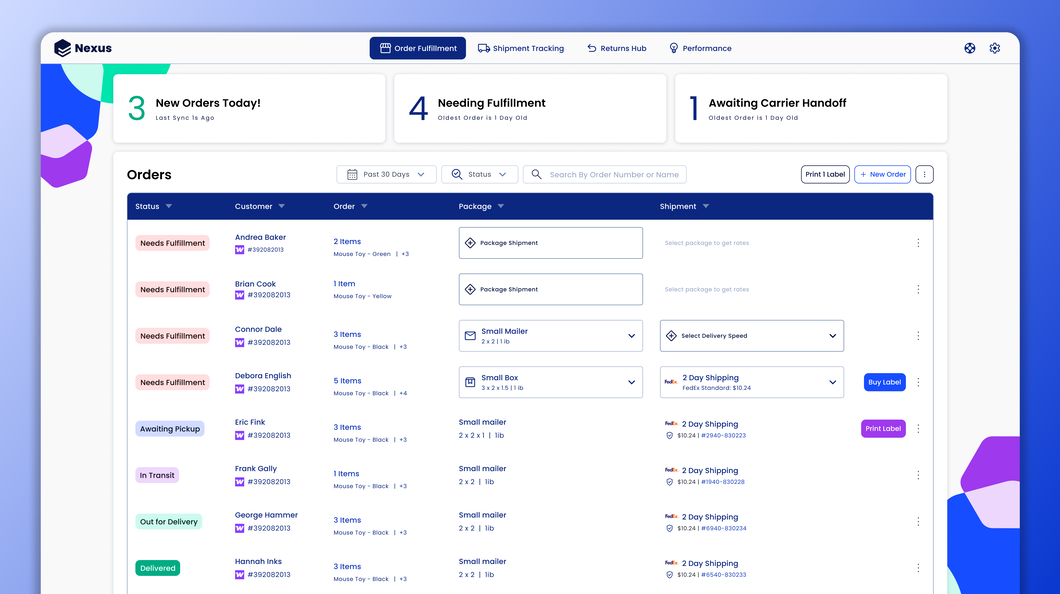
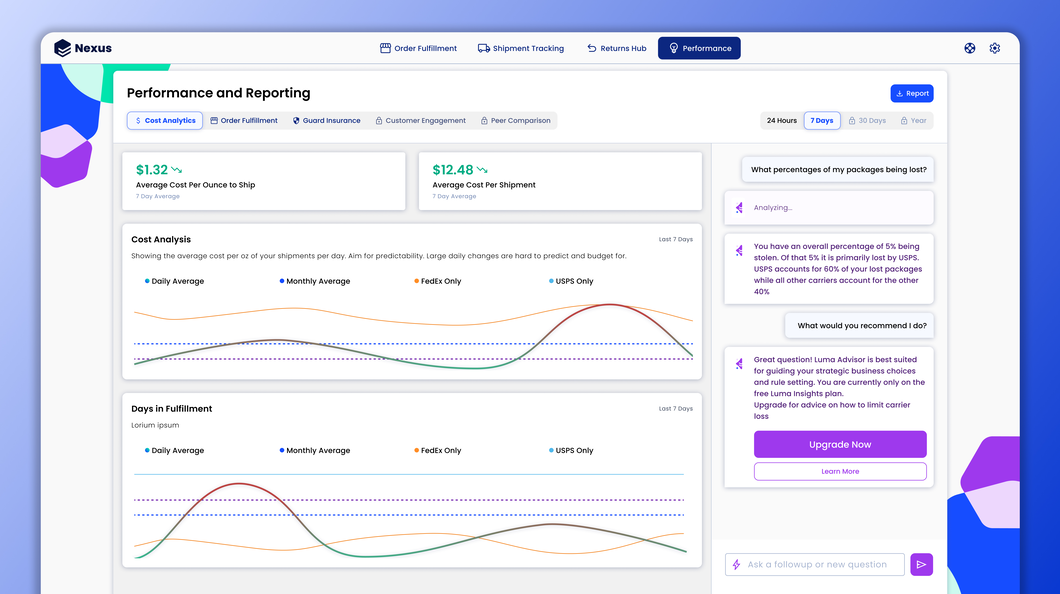
After iterating and competitive research we came to our first full proposal and prototype. This design focused on single page interactions and mixing reports in with daily actions.
We used the EasyPost style guide for the UI, ShipBlink inspired order detail slideouts and WeSupply's onboarding steps.
Prioritization for MVP and Final Mocks
Prototype User Testing
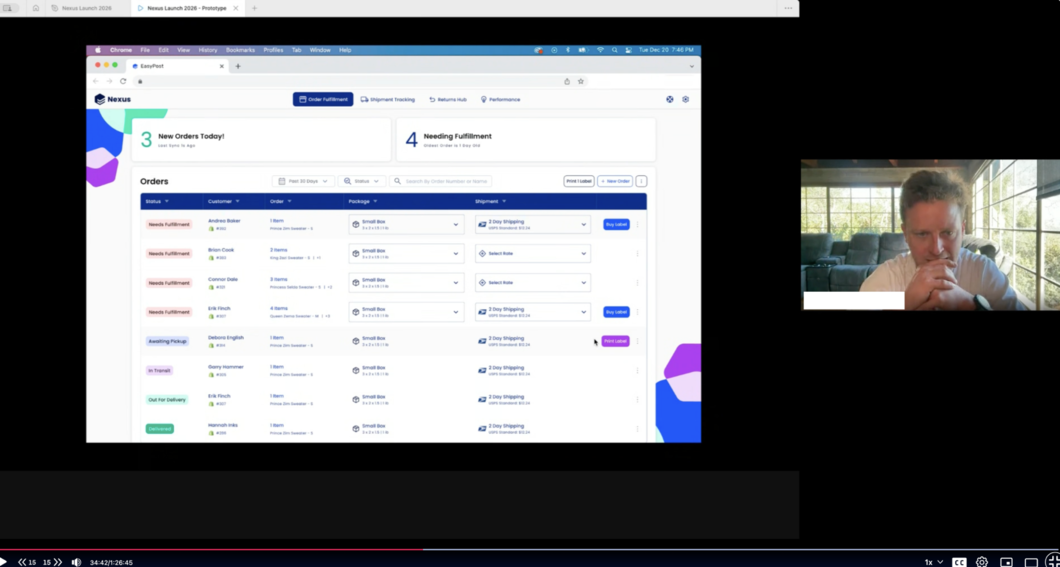
EasyPost used Userlytics to run the prototype through user testing. We targeted users with a history of shipping products and limited technology skills.
Key Research Findings:
Overall, users thought the user interface and the experience of fulfilling orders, purchasing labels, and accepting returns was "straightforward" and "easy."
- 17 / 20 users found the order fulfillment process to be "very easy"
- 16 / 20 users found the settings page easily
- 9 / 20 users did not understand or notice how the package weight was being calculated
Identifying MVP
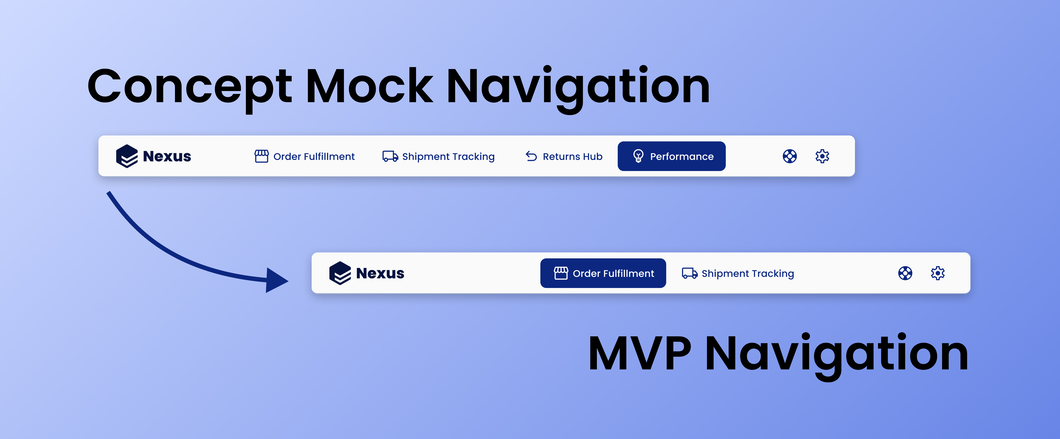
Based on user feedback and research we decided that the most important feature was the base orders dashboard and all the supporting tasks within that flow. Reporting and returns were not needed to launch to the public and they would be a fast follow.
This reduced the number of pages down from 5 to 3: Orders Dashboard, Shipment Tracking, and Settings.
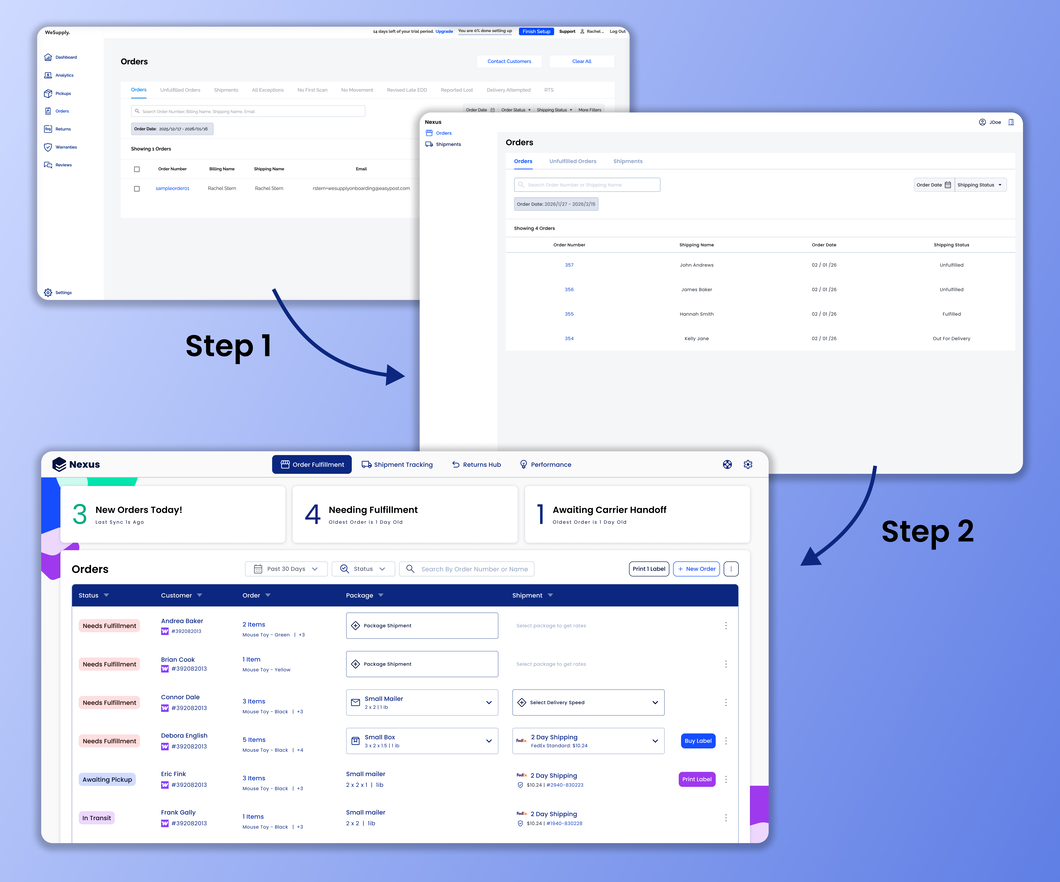
Steel Threading UI for Launch
After working with Engineering we decided that the fastest way to market was to launch with the WeSupply front end. Then each sprint we could redesign one section of the app at a time.
However for this proposal to work, sections of the WeSupply experience needed to be hidden.